
1m-year-old ‘lost world’ discovered, Flinders University, February 2026
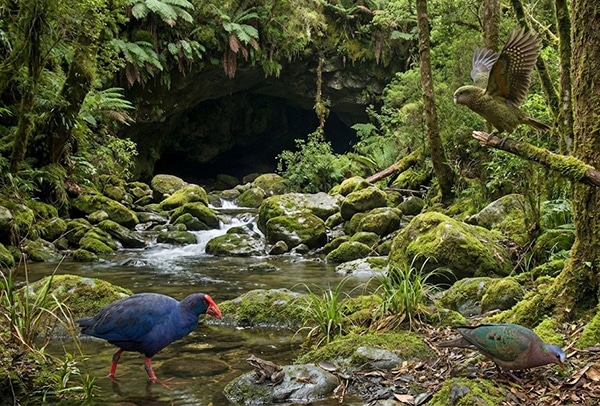
Australian and New Zealand scientists have unearthed the remains of ancient wildlife in a cave near Waitomo on Aotearoa’s North Island, the first time a large number of million-year-old fossils have been found – including an ancestor of the large flightless Kākāpō parrot.

The discovery of fossils from 12 ancient bird species and four frog species has opened a rare window into how New Zealand looked about 1 million years ago.
It indicates that New Zealand’s ancient wildlife was significantly impacted by catastrophic climate changes and volcanic eruptions. This resulted in frequent extinctions and species replacements well before human arrival, according to new research published in Alcheringa: An Australasian Journal of Palaeontology.
Lead author, Flinders University Associate Professor Trevor Worthy, says the study breaks new ground.
“This is a newly recognised avifauna for New Zealand, one that was replaced by the one humans encountered a million years later,” says Associate Professor Worthy, from the College of Science and Engineering at Flinders University.
“This remarkable find suggests our ancient forests were once home to a diverse group of birds that did not survive the next million years.”
The fossils were analysed by a team of palaeontologists from Flinders University and Canterbury Museum, along with volcanologists Joel Baker from the University of Auckland and Simon Barker of Victoria University of Wellington.
The findings suggest that about 33-50% of species went extinct during the million years before humans arrived in Aotearoa New Zealand.
These extinctions were driven by relatively rapid climate shifts and cataclysmic volcanic eruptions, says co-author and Canterbury Museum Senior Curator of Natural History Dr Paul Scofield.
“From our excavations at St Bathans in Central Otago over many years, we have a snapshot of life in Aotearoa between 20 and 16 million years ago. These new findings cast light on the 15 million year period from then to 1 million years ago, which is largely absent from New Zealand’s fossil record,” says Dr Scofield.
“This wasn’t a missing chapter in New Zealand’s ancient history, it was a missing volume.”