Media Release, 2026 galang recipients announced, Powerhouse Museum, 26 March 2026
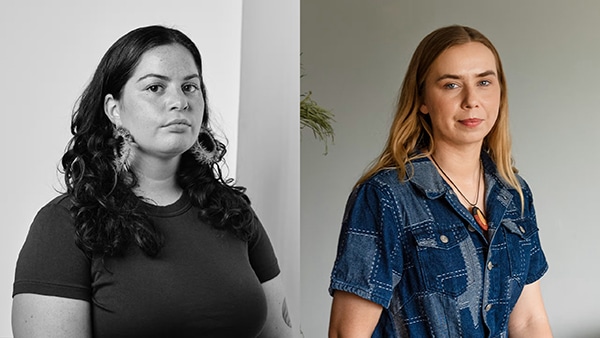
Powerhouse in partnership with the Cité internationale des arts announce artists Moorina Bonini and Tarni Eastwood as the recipients of the 2026 galang Residency.
Now in its fourth year, the prestigious residency program supports Australian First Nations creative practitioners through residencies in Paris in June and July 2026.
Moorina Bonini is a descendant of the Yorta Yorta Dhulunyagen family clan of Ulupna and the Yorta Yorta, Wurundjeri and Wiradjuri Briggs/McCrae family. An artist of First Nations and Italian heritage, her practice reframes institutional perceptions of First Nations identity.
Working across installation, moving image, and cultural practice, Bonini has exhibited nationally and internationally at ACMI, The Shed (New York), City Gallery Wellington, Gertrude Contemporary, the MCA and NGV.
In June, Bonini will travel to Paris to examine the Musée du quai Branly–Jacques Chirac’s collection of Australian objects. Reflecting on boomerangs, spear throwers, shields and related objects from the collection, Bonini will assess how First Nations cultural material is documented through a European lens and explore how their mulana (spirit) of Country can be returned.
2026 galang Residency recipient Moorina Bonini said, ‘I feel excited to have been selected for the 2026 galang Residency Program. This opportunity comes at a crucial point in my career and will support me to create international networks that will inspire and further develop my practice-led research. I can’t help but also recognise the strength and work of my Elders, who inspire me every day. I look forward to going to Paris and being able to share this experience with my family and community.’
Tarni Eastwood is a Ngiyampaa and Guringai multidisciplinary artist, curator, and weaver, based on Dharug Land in Western Sydney. Her practice integrates weaving, sculpture, textiles, painting and photography and explores themes of identity, resilience and cultural storytelling.
Eastwood will embark on her residency in July to develop a series of woven headpieces that situate Australia’s First Nations weaving knowledge within a European millinery context. These pieces will challenge colonial ideals positioning First Nations headwear as ethnographic artefacts, rather than living artistic works.
2026 galang Residency recipient Tarni Eastwood said, ‘This is a dream come true. I’m honoured to be selected for the 2026 galang residency. Spending time in Paris gives me the opportunity to learn from the city’s rich fashion and cultural history, share my work on the international stage and expand the reach of my practice. I look forward to the conversations and connections this experience will bring and to seeing how it inspires and elevates the way I translate cultural knowledge and storytelling into wearable art.’
Since 2023, six First Nations creative practitioners have travelled to Paris for the opportunity to connect and collaborate with international artists, industry professionals and institutions. Past residents include Archibald Prize-winning artist Vincent Namatjira OAM, multidisciplinary creative Jarra Karalinar Steel, architect Jack Gillmer, founder of Barabirang Projects Jayne Christian, leading journalist and storyteller Daniel Browning, and multidisciplinary artist Jody Rallah.
Powerhouse Chief Executive Lisa Havilah said, ‘The galang Residency continues to create important international opportunities for First Nations artists to expand their practice, build connections and share cultural perspectives. We are proud to support Moorina Bonini and Tarni Eastwood as they take their work and practice to Paris.’
Cité internationale des arts General Director Bénédicte Alliot said, ‘After three remarkable editions, the galang Residency programme has grown into something truly singular within the Cité internationale des arts: a living bridge between Australian First Nations artistic practices and the wider world. What began as a partnership has become a shared commitment to the exchange that transforms not only an artist’s practice, but our entire community. As we enter this fourth edition, we carry with us the conversations, collaborations and new ways of seeing that our previous laureates have woven into the Cité.’
About Powerhouse
Powerhouse sits at the intersection of arts, design, science and technology and plays a critical role in engaging communities with contemporary ideas and issues. We are undertaking a landmark $1.2 billion infrastructure renewal program, spearheaded by the creation of the new museum, Powerhouse Parramatta; expanded research and public facilities at Powerhouse Castle Hill; the renewal of the iconic Powerhouse Ultimo; and the ongoing operation of Sydney Observatory. The museum is custodian to over half a million objects of national and international significance and is considered one of the finest and most diverse collections in Australia. We are also undertaking an expansive digitisation project that will provide new levels of access to the Powerhouse Collection.
About Cité internationale des arts
The Cité internationale des arts is the largest artist residency in the world. Since 1965, it brings together, simultaneously, more than 300 artists of all origins and generations in the heart of Paris, enabling them to carry out creative or research projects in all disciplines (visual arts, music, film, design and architecture, performing arts, exhibition curation, etc.). Over periods of two months to a year, the Cité internationale des arts (a nonprofit private foundation, recognized as a public-benefit organization under French law) welcomes residents in the Marais district or Montmartre in an environment that fosters creativity, while also providing opportunities for meeting and exchanging with other arts and culture professionals and the general public. The Cité also ensures each artist receives the support they need during their residence.In collaboration with its many partners, it issues several calls for applications every year on specific themes and/or for specific projects, while developing targeted residency programmes.Throughout the year, the Cité organises a rich, multidisciplinary and protean arts programme (open studios, exhibitions, concerts, performances, debates, etc.), promoting the work of current or former residents and affirming the role of the residency as a time for dialogue and experimentation.