Regional museums in Chile strengthen risk management and resilience with UNESCO’s support, UNESCO, 27 April 2026
In cities with radically different geographies and climates, such as La Serena, Talca and Aysén, museums have begun to move towards a new way of protecting their heritage: anticipating risk before it materialises. The recent delivery of risk management plans for the La Serena Archaeological Museum, the O’Higginian and Fine Arts Museum of Talca (MOBAT) and the Regional Museum of Aysén (MURAY) marks a milestone in the protection of cultural heritage in Chile.
The initiative, developed by the UNESCO Regional Office in Santiago, in collaboration with the National Subdirectorate of Museums of Chile’s National Cultural Heritage Service, represents a significant step forward, as it is the first time the Organization has worked directly with regional Chilean museums on the development of strategic tools for risk management.
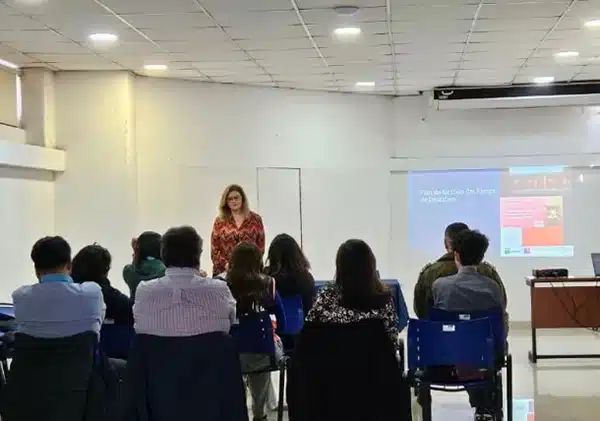
Each plan was prepared taking into account the territorial, institutional and heritage dimensions of the participating museums. The process included assessments analysing threats, vulnerabilities and existing capacities, considering factors such as the geographical environment, the condition of the infrastructure and the nature of the collections. On the basis of this analysis, prioritisation matrices and action schedules were defined, organised around the full risk management cycle: reduction, preparedness, response and recovery.
The project was carried out through a collaborative approach that helped strengthen the capacities of institutional teams. The participation of professionals from the three museums not only enriched the process, but also reinforced their involvement in preventive risk management, highlighting the value of their local knowledge. In this way, the plans function not only as technical instruments, but also as a foundation for an organisational culture focused on anticipation and preparedness.
“We now know that protecting heritage cannot be limited to reacting to an emergency; it must involve anticipating risks. These plans enable museums to strengthen their prevention and response capacities, safeguarding not only their collections, but also the memory and identity of communities. At UNESCO, we are committed to supporting cultural institutions in this challenge, promoting concrete tools that increase their resilience to disasters,” said Esther Kuisch Laroche, Director of the UNESCO Regional Office in Santiago.
The preparation of these work plans is framed within the UNESCO Recommendation concerning the Protection and Promotion of Museums and Collections, which recognises these institutions as essential custodians of collective memory.
Emergency preparedness is becoming indispensable, and in this context, the experience of La Serena, Talca and Aysén not only strengthens heritage management in Chile, but also projects a replicable model for other territories, nationally and internationally, seeking to protect their history through prevention.