Thomas’s long journey home to Country, South Australian Museum, 4 June 2026
Aboriginal and Torres Strait Islander viewers are advised that the following content contains images and names of people who are deceased.
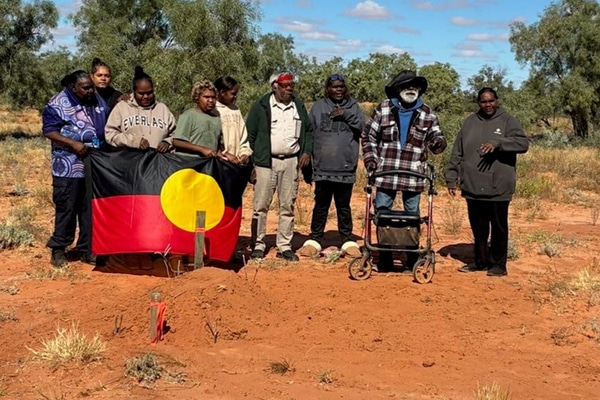
In the end, it was a simple grave.
A small mound in the red earth, and a few pieces of timber to mark the last resting place of Thomas Cowell.
But it meant so much, to so many people.
Thomas was home.
Thomas Cowell was a Lower Southern Arrernte (Irrwanyere) man who worked as a stockman, droving cattle through the far north of South Australia. He died from natural causes, aged about 65, at Kopperamanna Bore on 27 March 1959.
Maree Police were called, who documented his death and buried him at a nearby dam.
But in 1966, his gravesite was disturbed by local flooding and police returned to collect his remains. Officers could not locate any family and sent him to the South Australian Museum.
Thomas’s story was recently brought to light by the Museum’s Repatriation Manager Anna Russo, who works with Aboriginal communities on returning Aboriginal Ancestral remains in the Museum’s care to Country.
.jpg)
Anna then set about consulting Thomas’s family and community, and linking them at Finke in the Northern Territory.
The Irrwanyere Aboriginal Corporation led the process and called for community volunteers at their AGM to help. The Community members drove to Adelaide to collect Thomas and took him home to be buried on Country during National Reconciliation Week at Witjira National Park near Mt Dare, just south of the NT border.
Elder Raymond Finn was one of the community leaders to travel to Adelaide to collect Thomas’s remains.
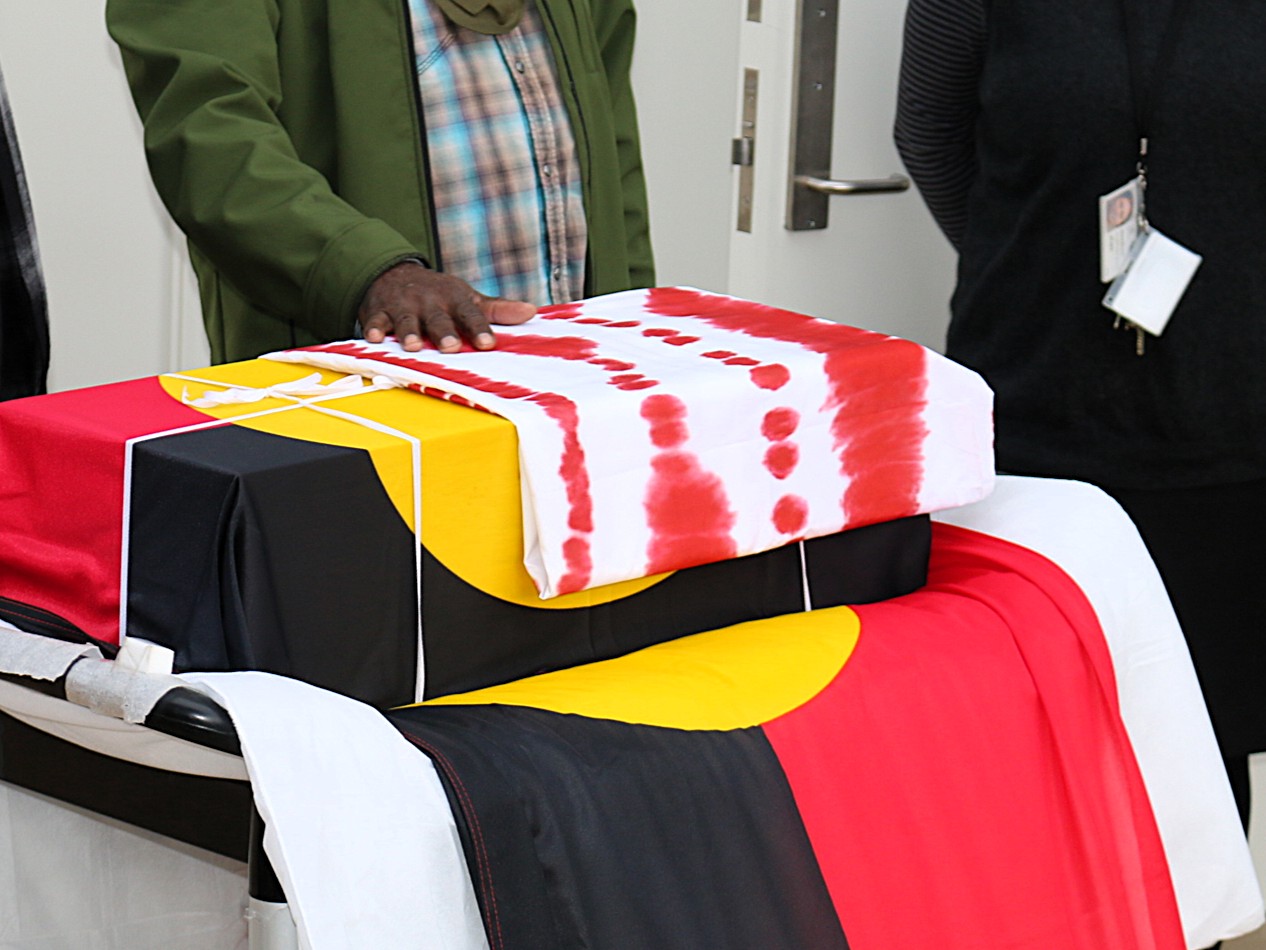
He placed his hand gently on the flag-draped box and spoke to those assembled for the farewell, including South Australian Deputy Premier and Aboriginal Affairs Minister Kyam Maher and South Australian Museum Director Dr Samantha Hamilton.
“Thank you for being here, because we’re taking him home,” Raymond said. ‘This one here is very special to us, to our family.
“We’re taking him back to Witjira National Park – that’s where he came from.
“I just want to say thank you to all of us gathered here.”
Irrwanyere Aboriginal Corporation Chair Jean Ah Chee said Thomas’s return had been long anticipated.
“The family appreciates the fact that they are able to lay their grandfather to rest on Country,” she said, “and thanks the South Australian Museum for this opportunity.”
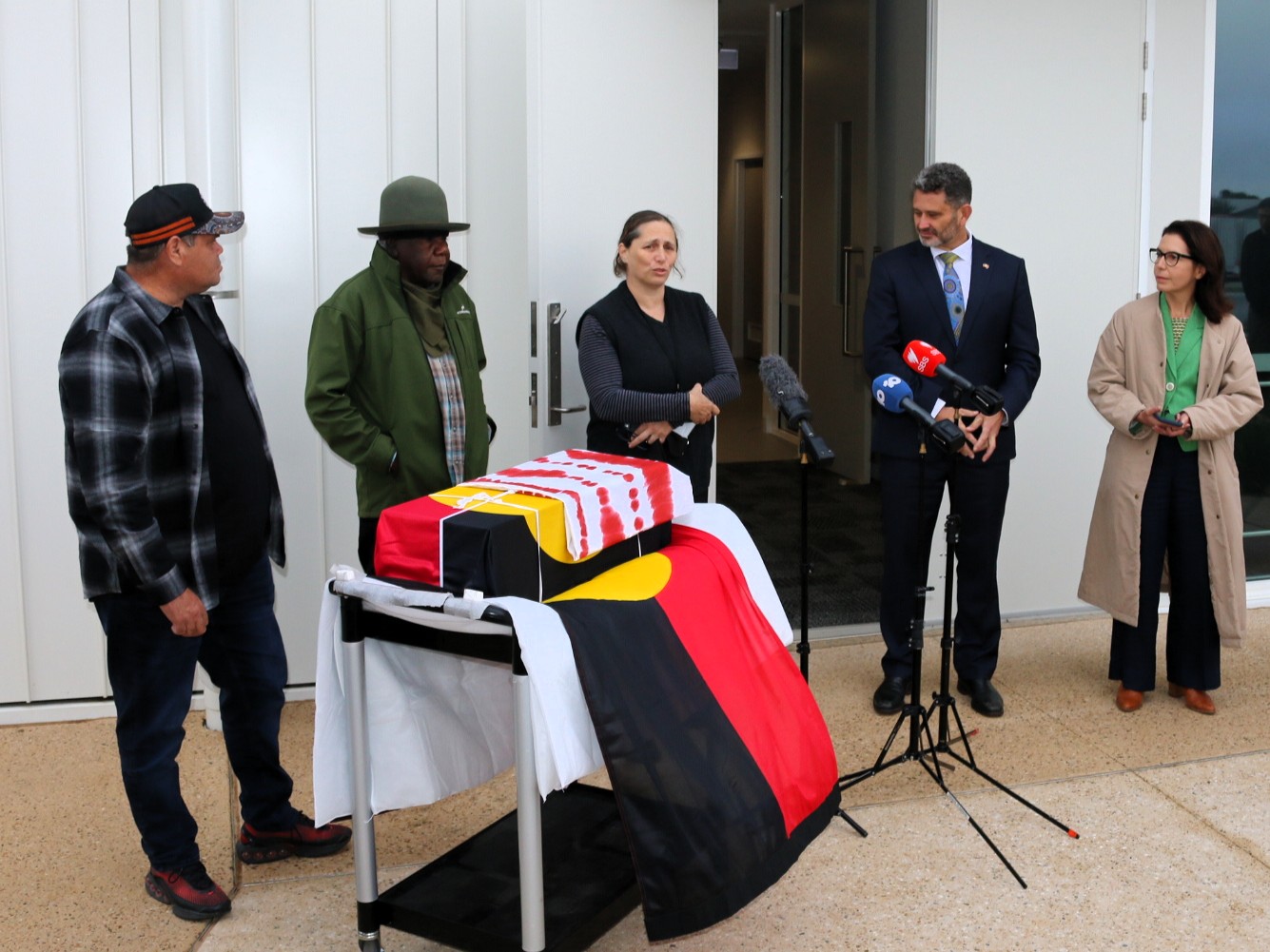
In ending her own journey with Thomas, Anna was there at Witjira when he was buried.
“It seems Thomas may have lived a relatively solitary life in his later years,” Anna said.
“That doesn’t mean he’s been forgotten though, and the Museum has worked very hard over the past few years to find his family and community and ensure he is returned home to Country.
“People travelled from all over South Australia and the Northern Territory for his long overdue funeral.”
Anna first found references to Thomas in State Records, while a PhD thesis written in the 90s based on the people of the western Simpson Desert indicated that Thomas was most likely a southern Arrernte man with links to the Mt Dare and Macumba area.
The documents, which included a 1997 oral history interview with the late Elder Bingey Lowe, showed that Thomas worked at Mt Dare Station and was the uncle of the late Brownie Doolan.
The oral history and Elders helped identify current extended family, who were notified and requested Thomas be returned to Country for burial.
Hon Kyam Maher, in his capacity as Attorney General, gave an exemption for the reburial ceremony under the Burial and Cremation Act. Thomas’s grave is located close to other repatriated Aboriginal remains discovered nearby in the 1930s and reburied in 2024.
The South Australian Museum participates in the Australian Government’s Indigenous Repatriation Program funded by the Commonwealth Office for the Arts.
“We at the South Australian Museum are grateful that his community had a chance to say a proper goodbye after all these years,” Anna said.
“The Museum has repatriated hundreds of Aboriginal remains in its care in recent times and will continue to work very hard at returning people in its care to Community and Country.”
Visit the South Australian Museum’s website for more information on its Aboriginal Heritage and Repatriation Program.