Media Release, Te Papa celebrates Matariki and 20 years of Taikura Kapa Haka, Museum of New Zealand Te Papa Tongarewa, 22 June 2026
Te Papa is marking Matariki with a vibrant programme, guided by this year’s theme, Matariki herenga waka, which acknowledges the stories, traditions and mātauranga carried by waka, and the voyages that bring people together.
The line-up includes Mānawatia a Matariki exhibition hub, whānau-friendly activities, an after-dark celebration, and a milestone Taikura Kapa Haka festival.
A special evening on Rongomaraeroa presents some of the most respected voices in traditional navigation and Pacific voyaging to share their knowledge of voyaging past, present, and future: Tainui Stephens (Te Rarawa), Manihera Forbes (Tainui), Hinerapa Ruphua (Ngāti kahungunu, Te Whānau a Apanui), and Tamahau Tangitu (Ngāti Ranginui, Ngāi Te Rangi, Ngāti Hauā).
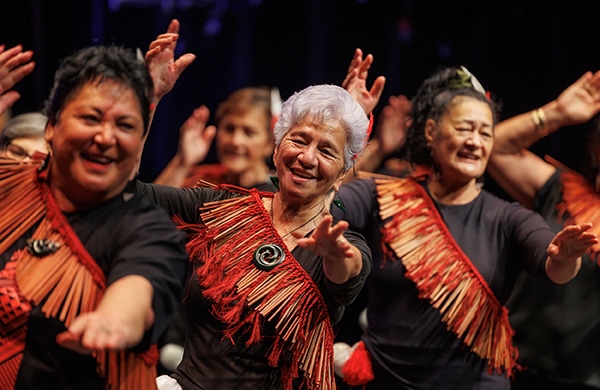
At the heart of its Matariki programme is Taikura Kapa Haka, the annual festival that brings together hundreds of kaumātua from across Aotearoa to celebrate and perform kapa haka, waiata, and poi. This year marks its 20th anniversary.
Chair of He Kura Te Tangata Trust, Turongo Paki says, “Twenty years ago, this kaupapa was born from the vision of my grandmother, Te Arikinui Dame Te Atairangikaahu, alongside many others committed to preserving our waiata, stories, and traditions of our tūpuna.”
“Many of the waiata performed at Taikura were already more than one hundred years old when this festival began. Today, because of their foresight and dedication, those same waiata have now been sung for one hundred and twenty years, carried on the voices of our kaumātua and passed to new generations through this kaupapa.”
“As we celebrate this milestone and look to the future, we honour every voice, every step, and every contribution that has sustained Taikura. Our kaumātua remind us that culture is not inherited; it is practised, lived, and shared.”
“May we continue to hear these songs, tell these stories, and uphold these traditions for the next twenty years and beyond.”
Connections and commitment to Matariki by Te Papa runs far deeper than any single event season – it has long celebrated the Māori New Year, and in 2022, hosted the official launch of the first public holiday.
Te Papa Kaihautū, Dr Arapata Hakiwai says, “Te Papa has been proud to be a home for Matariki for many years, and Taikura Kapa Haka is at the heart of that story.”
“We acknowledge the mana of our taikura and the enduring partnership that has helped Matariki flourish as a national celebration.”
“Our kaumātua are living repositories of mātauranga, and their performances remind us that Matariki is not only seen in the sky, but also felt in the voices, the movements, and the wisdom of our elders.”
More info: tepapa.nz/Matariki2026
By the numbers
The Matariki period is consistently among the busiest periods at Te Papa, drawing an average of over 14,000 visitors each season from 2022–2026:
- The official launch of the first Matariki public holiday was held at Te Papa, four years ago in 2022.
- Learning about the culture of Aotearoa New Zealand and te ao Māori were key motivators for visiting Te Papa during Matariki, particularly among international visitors.
- Over the last five years the Matariki programme at Te Papa has reached an estimated 10,000 people.
- Over 190,000 people have visited the Mānawatia a Matariki hub since it opened in 2022.
- 40% of survey respondents said the hub was a motivating factor for their visit.
- From cultural discovery to community celebration, the hub has drawn international visitors interested in learning about te ao Māori, and locals keen to celebrate Matariki.
In 2005, under the chairmanship of the late Tama Huata, Taikura was introduced to Te Matatini:
- The first Taikura Kapa Haka at Te Papa was in 2008.
- Over 100,000 people worldwide tune into the annual Taikura Kapa Haka livestream, connecting te ao Māori with audiences around the globe.
- One of the earliest Taikura Kapa Haka rōpū date back to the 1960s.
- Kaihaka (performers) range in age from 50 to over 90 years old.
- Each year, more than 600 kaumātua take to the stage.