From Conservation to Crocodiles: Australia’s Museums Mark World Environment Day, Council of Australasian Museum Directors, May 2026
Australia’s CAMD museums are marking World Environment Day on Friday 5 June with a nationwide program of events, talks, and experiences that showcase why museums are among the nation’s most powerful forces for environmental understanding, education, and action.
From fossil excavations in Darwin after dark and polar exploration in Melbourne, a rapid-fire symposium in Adelaide, and an ocean policy oration and film screening in Sydney, CAMD member institutions are bringing environmental science to the public in ways that are accessible, inspiring, and engaging.
This year’s World Environment Day theme is ‘Now for Climate’. As the United Nations’ principal vehicle for encouraging awareness and action for the protection of the environment, World Environment Day connects with the work across all of the 24 CAMD institutions.
Chair of CAMD and Director & CEO of Australian Museum, Kim McKay AO, said museums and galleries are more relevant now than ever before.
“For Australia’s museums, World Environment Day is an opportunity to remind us of something that often goes unrecognised: our collections are not relics of the past, they are living scientific infrastructure, holding the evidence that researchers, policymakers, and communities depend on to understand climate change, protect biodiversity, and plan for the future.
“Australia’s museums are far more than places to visit, they are the custodians of the scientific evidence our nation depends on to understand and respond to environmental change. On 5 June, the public will connect to the work that goes on in our institutions every day: the research, the collections, the community engagement, and this directly connects to the health of our planet.”
Across the Country, Museums are in action on World Environment Day, 5 June 2026
In Darwin, the Museum and Art Gallery of the Northern Territory (MAGNT) is welcoming families into the museum after dark for Bones and All, a World Environment Day special that takes children aged 5 – 10 through natural science galleries, fossil identification, and hands-on trace fossil making. MAGNT’s regular Mini Makers program is also going green for the day, with a World Environment Day theme for its Friday morning session.
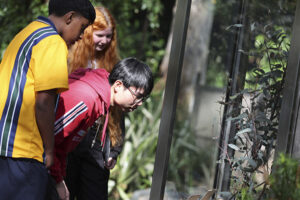
In Melbourne, Museums Victoria is running a special Student Climate Commons careers fair: Careers that Care for Our Wondrous Planet, connecting students with sustainability professionals from across the non-profit, public and private sectors. The institution is also hosting a special talk on ice biomes featuring polar explorer Tim Jarvis AM, exploring what the world’s frozen landscapes reveal about our climate past and future.
In Sydney, the Australian Museum is hosting the sixth annual Talbot Oration; Our Ocean, Our Lifeline featuring internationally renowned ocean explorer and policy leader Terry Garcia from the USA. Drawing on a career spanning the US National Oceanic and Atmospheric Administration and the National Geographic Society, Garcia will map the threats facing our oceans and make a compelling case for cautious optimism and individual action.
In Adelaide, the South Australian Museum is hosting Rapid Research for World Environment Day, a public symposium at the State Library of South Australia. Researchers from the Museum’s Collections and Research Team will each deliver five-minute presentations on their work and its environmental significance, a reminder that behind every collection is a scientist asking urgent questions about our natural world.
In Brisbane, Queensland Museum is inviting visitors to explore Science on a Sphere at SparkLab: an immersive, self-led journey through ocean currents, animal migrations, plate tectonics and planetary systems. The Museum’s Croc! Lost Giants to Living Legends exhibition and Wild State gallery offer further opportunities to connect with Queensland’s extraordinary natural environments.
In Canberra, the National Museum of Australia is marking the day with a focus on the Great Barrier Reef, one of Australia’s most iconic and most threatened natural environments, connecting audiences to the long history of efforts to protect it.
The Council of Australasian Museum Directors (CAMD), which represents the directors of Australia’s and New Zealand’s major museums and collecting institutions, marks World Environment Day with a nationwide program of events.
About CAMD
The Council of Australasian Museum Directors (CAMD) represents the directors of Australia’s and New Zealand’s major museums, galleries, and collecting institutions.